
Meeting Planner: Master the meeting planner workflow
A concise guide for meeting planner success: design engaging, results-focused meetings people actually want to attend.
2025-12-15
Let's be honest, most meetings are a colossal waste of everyone's time. A black hole where productivity goes to die. But here's the good news: they don't have to be. With a bit of strategic thinking, you can go from being a simple scheduler to a meeting planner who orchestrates sessions that actually get things done and move the business forward.
Your Blueprint For Meetings That Actually Matter
The secret to becoming a great meeting planner isn't about fancy templates or complex software; it's a fundamental mindset shift. Ditch the old habit of just throwing an agenda together. The real magic, the stuff that leads to breakthrough moments, happens when you obsess over the why behind the meeting.
Get that part right, and everything else—who to invite, what to discuss, how to follow up—just clicks into place. Think of this initial planning stage as laying the foundation for a skyscraper. If it's solid, the rest of the build is smooth sailing.
Nail Down Your Primary Objective
Before you even glance at your calendar, stop and ask yourself the most critical question: "What is the one thing we absolutely must walk away with when this is over?" A vague goal like "Discuss the Q3 launch" is a one-way ticket to a rambling, unfocused conversation that goes nowhere.
You need to frame it as a concrete, tangible outcome. A seasoned meeting planner knows the difference and defines the goal with laser-like precision.
- Weak Goal: Discuss the marketing campaign.
- Strong Goal: Decide on the final three ad creatives for the social media campaign.
See the difference? That simple tweak transforms a passive update into an active, decision-making powerhouse. When you focus on a specific outcome, you instantly know who needs to be in the room and exactly what information they'll need to make that call. It's a lean, efficient approach, which you can read more about in our guide to applying the lean business model canvas to your work.
"A meeting without a 'why' is just a conversation that wastes everyone's time. Before you book anything, you must be able to complete this sentence: 'By the end of this meeting, we will have...'"
Connecting Meetings to the Bigger Picture
The truly exceptional meeting planners are the ones who tie every gathering back to broader company objectives. In today's tough economic climate, every single minute spent in a meeting needs to be a smart investment of company time and money.
Look at Ukraine's dynamic business environment, for example. Meeting planners there are facilitating pivotal gatherings that drive massive economic activity. At the Ukraine Recovery Conference in Rome, planners orchestrated an event that led to over 200 agreements being signed, worth a staggering EUR11 billion. It’s a powerful reminder that well-planned meetings can shape entire industries. You can dive deeper into these economic insights from KPMG in Ukraine.
Crafting An Agenda That Drives Action
Let’s be honest, most meeting agendas are just a list of topics. They’re a snoozefest. But a well-crafted agenda? That's your secret weapon. It’s the script that dictates whether you’ll have a productive, high-energy session or another one of those meetings everyone dreads.
Think of it as the difference between a vague to-do list and a detailed battle plan. A great agenda gives every single minute a purpose, assigns a leader to each part of the conversation, and sets a realistic pace. It’s not about being a drill sergeant; it's about respecting everyone's time and making sure you actually achieve something.
The Power Of A Question-Based Agenda
It's time for a revolution. Ditch the boring, static agenda format for good. Instead of a bland topic like "Q3 Marketing Strategy," try reframing it as a compelling question: "What are the three most impactful marketing channels we should invest in for Q3?"
See what that does? It’s a simple trick, but it works wonders.
First, it instantly tells everyone why you're discussing the topic. The goal is crystal clear. Second, it flips a switch in people's brains, getting them to think about solutions before they even walk into the room. This is a core technique every skilled meeting planner learns to master.
An agenda should be a set of questions to be answered, not a list of topics to be discussed. This turns a passive update into an active problem-solving session.
Building Your Agenda In Notie
Alright, let's put this into practice. Picture yourself planning that make-or-break quarterly strategy session. This is where a tool like Notie really shines, letting you build an interactive agenda that’s more than just a document.
You can embed links to pre-reading materials right inside the agenda. So, next to that question about Q3 marketing channels, you can pop in a link to last quarter’s performance report. No more excuses for people showing up unprepared.
Then, get proactive with Notie's form-building features. Add a simple question like, "What's one 'wild card' marketing idea you think we should consider?" to the agenda. This not only gathers amazing insights but also makes your team feel heard and invested from the very start.
Here’s the simple-but-powerful trio for every agenda item:
- Set Clear Goals: What does a "win" look like for this topic? Is it a firm decision? A brainstormed list of ideas? A finalised plan? Spell it out.
- Assign Owners: Every item needs a champion. This person introduces the topic, keeps the conversation on track, and steers it towards the goal.
- Timebox Everything: Give each item a strict time limit. This injects a bit of urgency and prevents one topic from derailing the entire meeting.
The Action-Oriented Agenda Checklist
Use this quick reference to ensure every component of your agenda is designed to drive results and engagement.
| Component | Purpose | Example |
|---|---|---|
| Question-Based Topic | To frame the discussion around a specific problem to solve or decision to make. | "How can we reduce customer churn by 10% next quarter?" |
| Allocated Time | To create a realistic schedule and keep the meeting moving forward. | 15 minutes |
| Topic Owner | To assign clear responsibility for leading the discussion on that item. | Sarah (Head of Customer Success) |
| Desired Outcome | To define what success looks like for that specific agenda point. | A list of 3-5 prioritised initiatives to test. |
This structure transforms a passive document into a dynamic tool that holds everyone accountable and laser-focused on the objectives. It's how you get things done.
Getting Your Ducks—and Your Room—in a Row
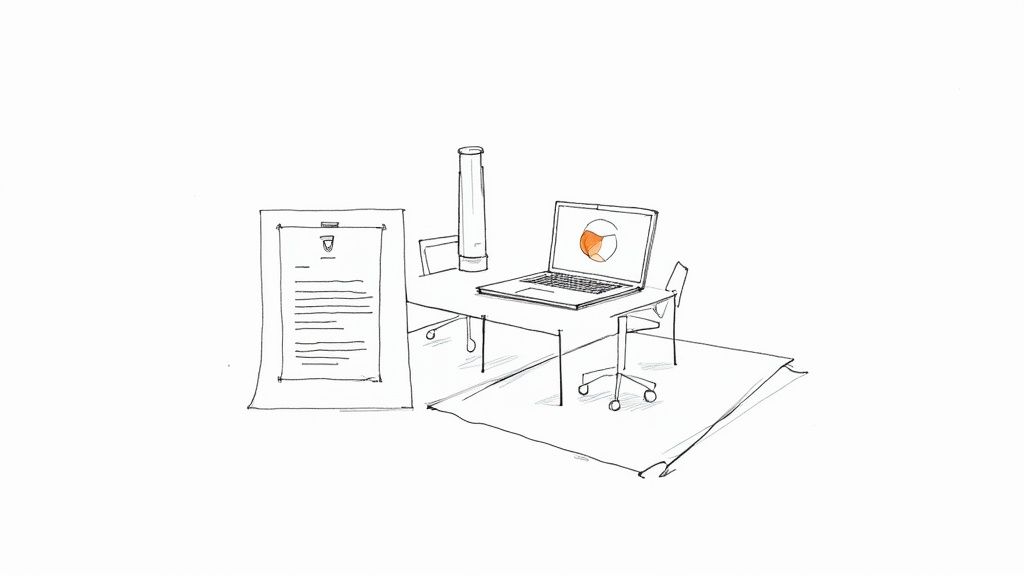
Any pro will tell you the real magic of a great meeting happens long before anyone walks through the door. It’s all in the prep work. This is what separates a session that hums with productivity from one that’s just a chaotic waste of everyone's afternoon.
Think of your meeting invitation as more than just a calendar entry. It's your first chance to get people on board and invested. You need to sell the meeting's value. Clearly state what you're trying to achieve, why they specifically need to be there, and what they should do or think about beforehand.
Get People Primed and Ready to Go
Ever dreamed of walking into a meeting where everyone is already up to speed and ready to jump in? That’s not a dream; it’s just smart planning. Don't leave great insights to chance—go out and get them ahead of time.
This is where a simple pre-meeting survey can be a game-changer. You can quickly gather crucial input that will shape the entire conversation. Our guide on Notie's form builder shows you just how easy this is to set up.
Here are a few quick wins you can score with a little pre-engagement:
- Fish for Questions: Ask attendees what burning questions they have about the agenda topics. This helps you anticipate and prepare.
- Collect the Numbers: Have team members submit key metrics or updates beforehand. No more wasting the first 15 minutes on basic reporting.
- Take the Temperature: Use a quick poll to get a feel for the team's initial reaction to a new idea before the debate even begins.
Doing this respects everyone's time and shifts the meeting's focus from just sharing information to actually analysing it and making decisions.
Setting the Stage for a Great Outcome
Whether you’re meeting in person or online, the environment has a massive impact on the energy in the "room." Don't just book a space; create an experience. For a brainstorming session, why not arrange the chairs in a circle instead of the classic boardroom setup? It instantly feels more collaborative and less like a lecture.
A meeting room isn't just a container; it's a tool. A thoughtful setup can encourage participation, while a poor one can stifle it.
This prep is just as critical for virtual meetings. Double-check your video conferencing software and maybe send a quick "tech check" guide to everyone beforehand. Simple reminders, like asking people to use headphones and test their internet, can eliminate those awkward technical glitches that kill momentum.
The meetings world is always changing, and planners have to be nimble. Look at Ukraine, where large-scale meetings are making a comeback despite immense challenges. Planners there have had to become masters of flexibility, with nearly half of all bookings happening within the same year—a direct response to unpredictable threats. This kind of agility is vital everywhere, especially when 77% of businesses are battling burnout. A well-planned meeting isn't just a meeting; it's a strategic tool for boosting morale and getting everyone pulling in the same direction. You can dive deeper into this trend from the State of the Meetings Industry Report.
Running the Show Like a Pro
Alright, this is it. Showtime. All that prep work has brought you to this very moment. But let's be honest, a killer plan is only half the victory. Now you’ve got to put on your facilitator hat, guide the conversation, keep the energy up, and make sure this meeting actually does what it's supposed to do.
This isn’t about being the loudest person in the room; it's about being the conductor. A seasoned meeting planner knows how to kick things off with a bit of spark, steer through the awkward silences or heated debates, and ensure everyone gets a word in—not just the usual suspects.
Grab Their Attention from Minute One
How you start sets the stage for everything that follows. Please, don't just cannonball into the first agenda item. Take a breath. Remind everyone why they've given you their time. Just quickly restate that core objective you spent time defining earlier.
This one simple act brings everyone into focus instantly. It sends a clear message: "This isn't just another pointless meeting; we are here to figure out X." Your job is to be the guardian of that goal from the opening line to the final "thanks, everyone."
Next, do a quick fly-by of the agenda and the time you've blocked for each part. This little step is huge for managing expectations and showing you respect their packed schedules. A confident, clear start builds immediate trust and gets people leaning in.
Handling Those Inevitable Detours
You know it's going to happen. Someone will have a brilliant idea that has absolutely nothing to do with today's topic. A rookie move is to either shut them down flat or let the conversation get completely derailed. You're going to be smarter.
Let me introduce you to my favourite trick: the 'Parking Lot'.
The Parking Lot is just a designated spot—a corner of the whiteboard, a sticky note, a shared digital doc—where you can 'park' great ideas that don't belong in the current discussion. It's a way of saying "I hear you, and that's important," without letting the meeting go off the rails.
When a tangent pops up, you can jump in with, "That's a fantastic point, and it really deserves its own conversation. I'm adding it to our parking lot right now so we don't forget it, and we can tackle it later." It’s a simple, respectful way to gently guide the conversation back on track without making anyone feel ignored.
Nailing Down Decisions as They Happen
The whole point of a meeting is to get to a decision or an action. That's the gold. As the facilitator, your job is to crystallise these moments. When the group finally lands on an agreement, hit the pause button on the discussion.
Say the decision out loud for the whole room to hear. "Okay, brilliant. So we're all agreed to go with the Alpha campaign concept. Alex, you're going to own the next steps on that, right?" This verbal high-five makes the decision real and leaves zero room for confusion later.
This is where a tool like Notie really shines. While the conversation is flowing, you can be using its private notes feature to discreetly log these action items and decisions as they're made.
- Action Item: Draft initial copy for Alpha campaign.
- Owner: Maria
- Deadline: EOD Friday.
This behind-the-scenes work by the meeting planner is the secret sauce. You’re making sure nothing gets lost or forgotten, all without breaking the rhythm of the conversation. You're not just leading a meeting; you're actively building a record of its accomplishments in real-time. This is how a good plan becomes a great result.
What To Do When The Meeting’s Over
The clock hits the hour, laptops snap shut, and everyone scatters. If you think your job is done, you're about to lose the most important part of the game. A meeting’s real value isn't found in the quality of the discussion—it's measured by the action that happens afterwards.
This is where you lock in your wins. The post-meeting follow-up is what separates a forgettable chat from a real moment of progress. It’s your chance to spin abstract ideas into solid commitments and prove to everyone that the meeting was time well spent.
Get To The Point With Action-Focused Minutes
Resist the urge to write a word-for-word transcript of who said what. Let’s be honest, nobody has time to read that novel. Your mission is to create a short, sharp summary that shouts, "Here’s what we decided, and here’s who’s on the hook for it."
This document needs to be a beacon of clarity, not a swamp of conversation. Great meeting summaries focus entirely on the outcomes. I always structure mine around three simple things:
- Decisions Made: What did we actually agree on? State it plainly.
- Action Items: What are the exact next steps? List them out.
- Owners & Deadlines: Who is responsible for each task, and by when?
This is where a tool like Notie becomes your best friend. Since you’ve already been capturing key decisions in your private notes, you can export them straight into a clean, shareable table. This isn't just a record; it's an accountability tracker you can send out moments after the meeting wraps up.
A great meeting summary isn’t about what was said; it’s about what was decided. It’s a blueprint for action, not a historical archive.
Don’t Skip The Feedback Loop
You think you nailed it. The agenda was perfect, you kept everyone on track, and the action items are crystal clear. You're the perfect meeting planner, right? Not so fast. The best in the business are always looking to get better, and the only way to do that is to ask.
Don't make it complicated. A quick two-question survey sent right after the meeting is all it takes. I use Notie’s form builder to create something ridiculously simple:
- On a scale of 1-5, how valuable was this meeting for you?
- What's one thing that could have made it even better?
This little trick works wonders. First, you get priceless, honest feedback to sharpen your skills for next time. Second, it signals to your team that you genuinely respect their time and are serious about improving.
Nailing your follow-up and constantly refining your approach are huge parts of a solid document management workflow. When you create clear records of decisions and feedback, you build a system that gets smarter with every single meeting. That’s what turns you from a simple scheduler into a strategic partner nobody wants to lose.
Your Toughest Meeting Questions, Answered
Let's be honest, even the most meticulously planned meeting can get a little… weird. A conversation goes sideways, someone won't stop talking, or your boss questions why you’re even meeting in the first place. Navigating these moments with a cool head is what separates the meeting masters from the apprentices.
Think of this as your back-pocket guide for when things get tricky. These aren't textbook theories; they're battle-tested tactics for the real, messy world of meetings.
How Do I Handle A Meeting That Goes Completely Off-Topic?
Ah, the classic derailment. Someone brings up a juicy but irrelevant topic, and suddenly you're miles away from your agenda. Your job is to be the firm, friendly shepherd that guides the flock back.
First, acknowledge the point. Don't shut it down. A quick, "That's a really important point, and we definitely need to give it the attention it deserves," shows you're listening and you value their contribution.
Next, whip out the "Parking Lot." Tell everyone you're capturing that great idea on a whiteboard or in a shared note to tackle later. This simple move validates the speaker and their idea without letting it hijack your meeting.
Then, pivot back. "To make sure we get through what we all came here for, let's jump back to the budget review. We'll find a separate time for the parked item." This is where having a timed agenda is your secret weapon—it gives you the authority you need to get things back on track.
What Is The Best Way To Manage Attendees Who Dominate The Conversation?
We've all been in a meeting with a "stage hog." It takes some finesse to manage them without making it awkward. One of the best ways to do this is to proactively create space for others.
Once the talkative person has made their point, jump in with something like, "Thanks for that perspective, Alex. Maria, we haven't heard from you yet—what are your thoughts on this?" You're not shutting Alex down; you're just opening the floor.
A huge part of great meeting facilitation isn't just leading the discussion—it's actively balancing it to make sure the quietest person in the room has a voice.
Another trick is to build fairness right into the structure of your meeting. Try using a round-robin format where everyone gets, say, two minutes to share their thoughts uninterrupted. This makes equal participation a rule of the game, not something you have to enforce on the fly. If it's a persistent issue with the same person, a quiet one-on-one chat outside the meeting might be your best bet for a long-term fix.
How Can I Prove The Value Of My Meetings To Leadership?
You prove your worth with outcomes. Cold, hard, undeniable outcomes. Meetings only get a bad rap as a "waste of time" when their results are vague and fuzzy. Your job is to make those results crystal clear.
It starts before the meeting even begins. Define specific, measurable goals like, "Decide on the final Q3 marketing budget," not "Discuss marketing."
Then, your follow-up summary becomes your proof. Don't just list what you talked about; list the decisions made, the action items assigned, who owns them, and when they are due. Using Notie's exportable tables is brilliant for this, as it turns your meeting notes into a professional report that shows leadership exactly what their investment of time produced. You can draw a direct line from your meeting to actual progress, proving you're not just a scheduler—you're a strategic driver.
What Is The Single Biggest Mistake A Meeting Planner Can Make?
Hands down, the deadliest sin is failing to define a clear purpose before you do anything else. Without a specific goal, the entire process crumbles. You can't write a useful agenda, you won't invite the right people, and you have no idea what success even looks like.
A meeting without a "why" is just an expensive, scheduled conversation.
Before you book a room or send a single calendar invite, you absolutely must be able to finish this sentence: "By the end of this meeting, we will have..." If you can't end that with a concrete outcome—a decision, a plan, a final approval—you probably shouldn't be having a meeting at all.
Ready to turn your meetings from calendar clutter into action-packed sessions? Notie is the lightweight, AI-powered workspace that makes it dead simple to create agendas, capture decisions, and get feedback. Start planning meetings that actually matter today at https://notie.pro.